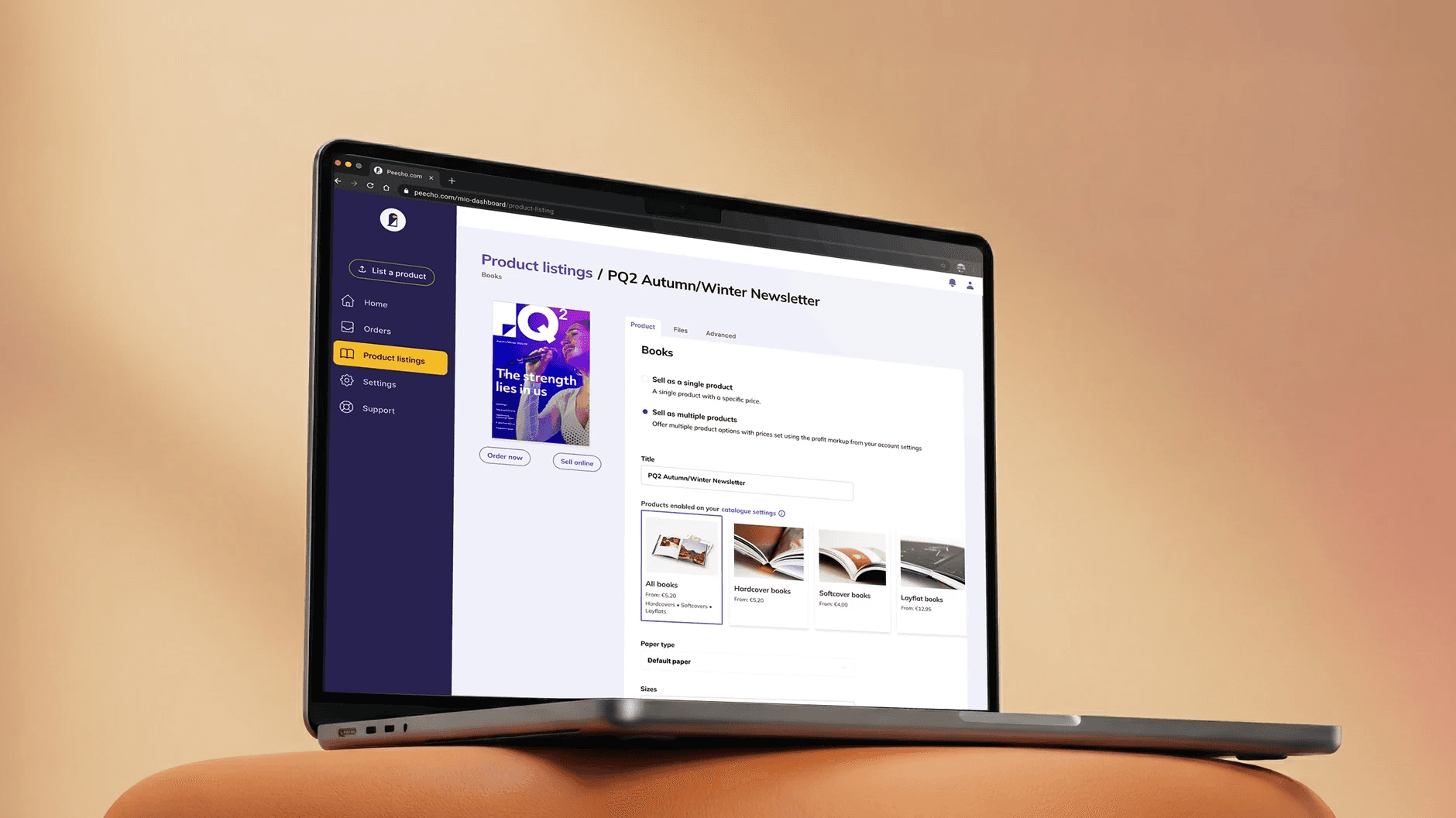
An open laptop showing the dashboard UI as its content

Peecho Product Listing

SKILLS

UI DESIGN • VIBE-CODING

YEAR

2025

INTRO

Peecho is a print-on-demand platform under the Prodigi group. It’s been around since 2005, serving both B2C and B2B customers. A big part of our merchants use the dashboard to create products and sell them without holding any inventory. We call them ”longtail.” While they don’t generate the highest volume of orders, they bring strong profit margins, generating around 200K in revenue per year.

THE PROBLEM

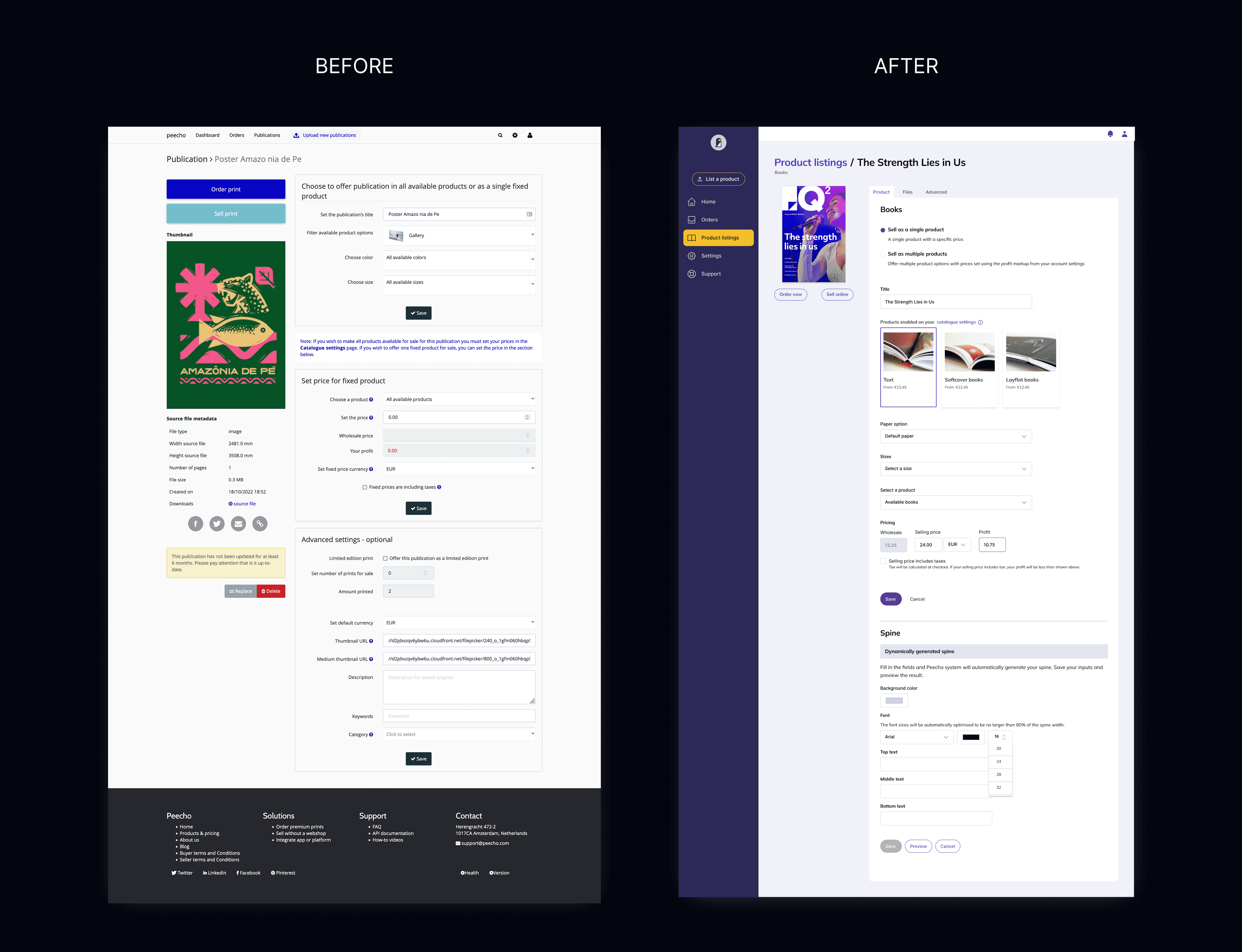
Peecho’s platform UI had never been updated. It still had that 2005 look and feel, but more importantly, there was no clear flow. Merchants had to figure out on their own how to create a new Publication (a legacy term from when Peecho focused on self-publishers) and start selling. The lack of direction made a simple task unnecessarily complex.

SOLUTION

The solution was clear from the start: simplify everything.

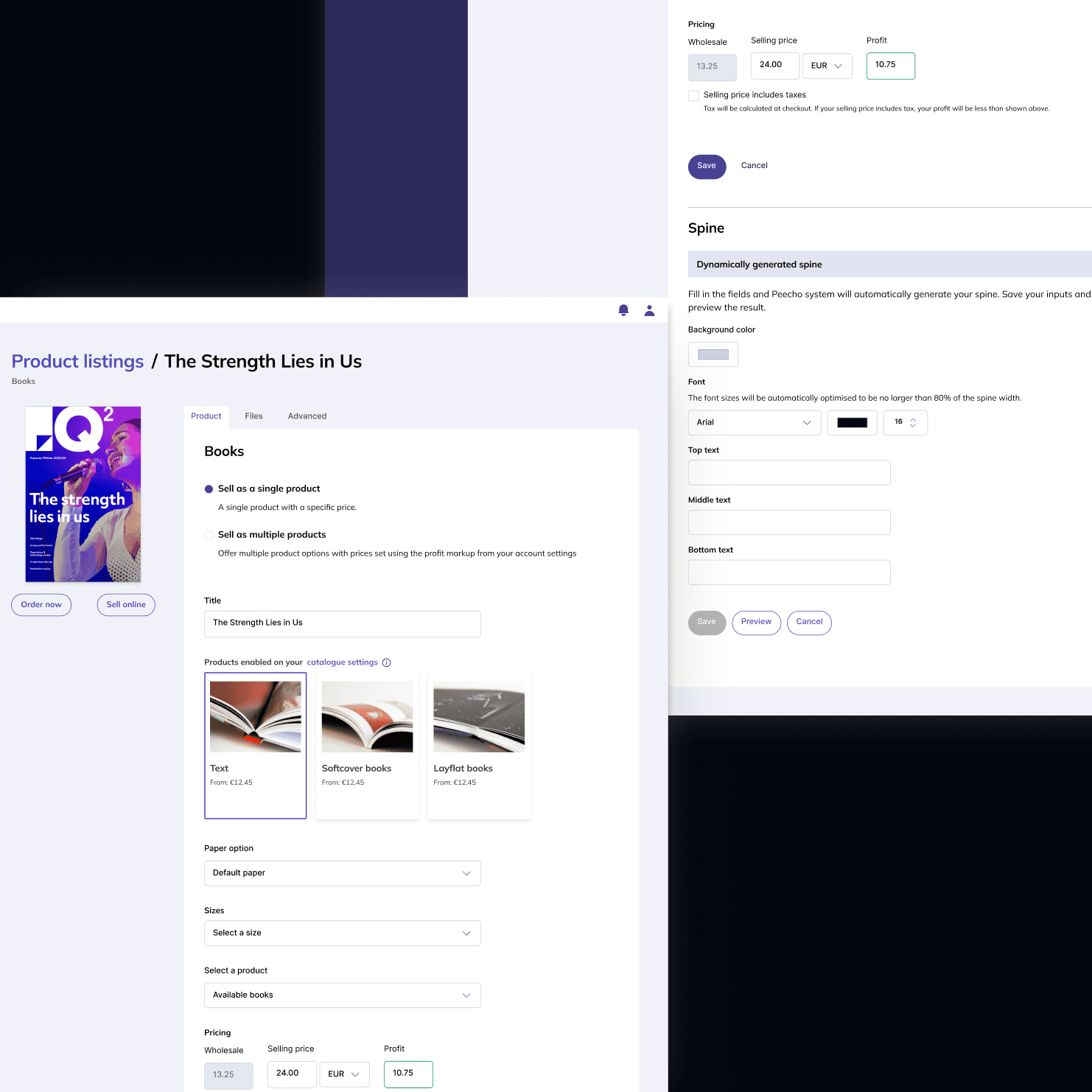
  • 3 tabs instead of clutter. We split the old page into separate tabs. The first tab puts essential elements front and center, everything merchants need to create a product. The secondary tasks were moved to other tabs where they don't get in the way of starting selling.

  • Clear, scrollable flow. All product attributes now appear in a logical order on the page. Merchants scroll down, make their selections, and save at the end. No more hunting for options or wondering what to do next.
THE PROCESS
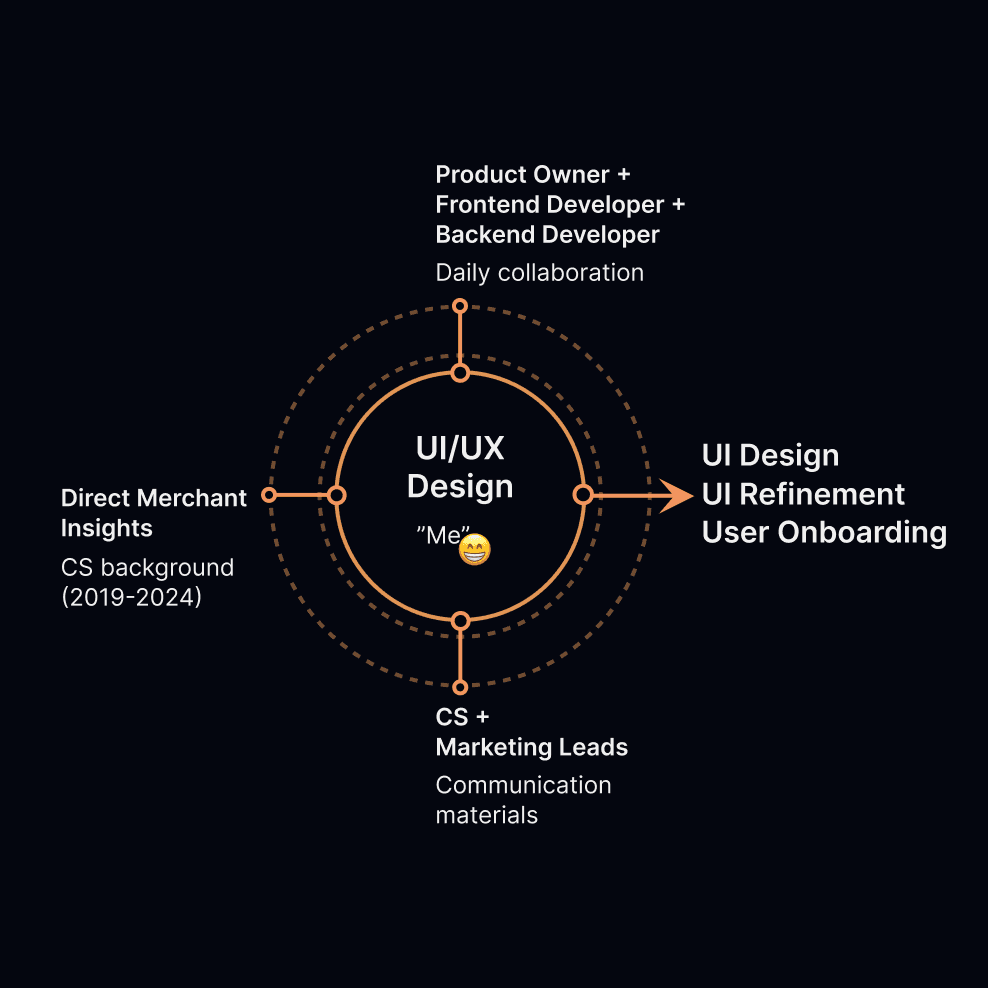
  • My role as UI/UX Designer. I worked with a Product Owner and two Developers in a Scrum format. I brought helpful insights about our merchants from my previous Customer Support role. I had transitioned from CS to UX in 2024 with good knowledge of their pain-points.

  • Kill your darlings. Midway through, we had to revert a technical catalog change that would negatively impact merchants. Sometimes the best decision is letting go of previous work when it doesn’t serve users.

  • UI code polishing with AI. After the design phase, during the implementation phase, I got access to the frontend code, and with help the from Claude Code, I refined some interface interactions and achieved pixel-perfect details.

  • Communication strategy. I coordinated with CS and Marketing to create a blog article and Help Center article explaining the changes to merchants.

THE PROCESS

  • My role as UI/UX Designer. I worked with a Product Owner and two Developers in a Scrum format. I brought helpful insights about our merchants from my previous Customer Support role. I had transitioned from CS to UX in 2024 with good knowledge of their pain-points.

  • Kill your darlings. Midway through, we had to revert a technical catalog change that would negatively impact merchants. Sometimes the best decision is letting go of previous work when it doesn’t serve users.

  • UI code polishing with AI. After the design phase, during the implementation phase, I got access to the frontend code, and with help the from Claude Code, I refined some interface interactions and achieved pixel-perfect details.

  • Communication strategy. I coordinated with CS and Marketing to create a blog article and Help Center article explaining the changes to merchants.

UI/UX Designer moved by curiosity and purpose. Let’s build empowering and enjoyable experiences together!

Paula Camargo

UI/UX Designer moved by curiosity and purpose. Let’s build empowering and enjoyable experiences together!

Paula Camargo

UI/UX Designer moved by curiosity and purpose. Let’s build empowering and enjoyable experiences together!

Paula Camargo